
Free white paper for hotel owners
Is Your Next Hotel Renovation Actually Creating Value?
A practical guide for hotel owners deciding where refurbishment capital will have the greatest commercial return.
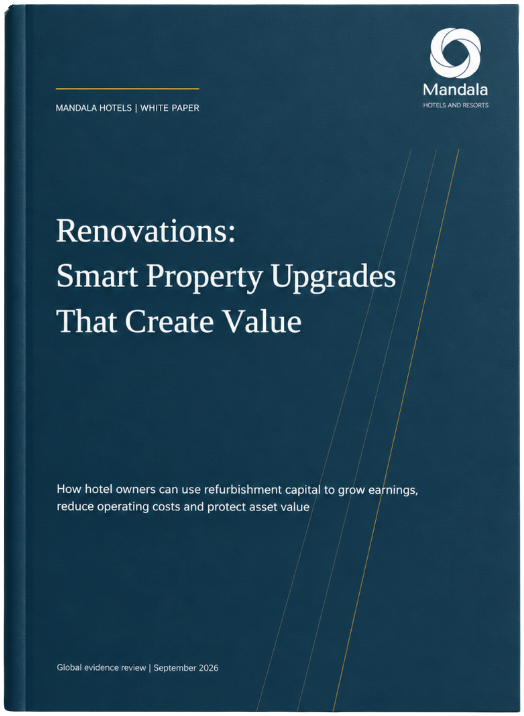
Download the Free White Paper
18 page evidence review for hotel owners, investors and asset managers. Instant download, no sign up.
Capital should not follow aesthetics. It should follow the commercial objective.
The premise of the white paper
The problem
Renovation Spend Does Not Automatically Create Value
Hotel owners can spend millions improving a property and still fail to materially improve the economics of the asset.
The more useful question isn't
“What should we renovate?”
It is
“Where is this hotel losing value, failing to create value or putting value at risk, and what physical investment can change that?”
Grow Revenue
Create inventory, room attributes and spaces guests can recognise, choose and pay more for.
Save Recurring Cost
Reduce utilities, maintenance, labour, outages and lifecycle operating expenses.
Protect Earnings
Prevent ageing product, recurring defects and a declining guest experience from eroding ADR, occupancy, reputation or market share.
Reposition or Protect Asset Value
Change the market position of the hotel, extend useful life and reduce obsolescence, compliance and resilience risk.
Each type of capital has to be judged by a different return test. The white paper sets out all four.
The cost of doing nothing
The Cost of Doing Nothing Should Be in the Business Case Too
Ageing rooms, maintenance problems, new competitors, outdated technology and declining guest sentiment mean the status quo is rarely a neutral financial scenario.
Research cited in the paper found renovated hotels recovered competitive penetration while non renovated hotels continued to lose ground.
Most renovation models compare
Today vs. after renovation
The better comparison
Future without renovation vs. future with renovation
“The correct renovation equation is not ‘today versus better.’ It is future without renovation versus future with renovation.”
The evidence
This Is Not Another Renovation Trends Report
The paper synthesises peer reviewed hospitality research, building science and published industry case studies. Three of its findings:
305 projects
Renovation projects analysed for what actually happened to revenue, profit and guest satisfaction after reopening, and how long the gains held.
543,213 reviews
Australian guest reviews showing where dissatisfaction really comes from, and which physical problems quietly cost hotels rate and occupancy.
US$484k a year
Combined energy and water savings reported from a single US$1.4m efficiency project, with room rates unaffected.
The paper does not treat individual case studies as universal benchmarks. It uses the evidence to build a practical decision framework for owners.
Inside the white paper
What the Owner Framework Covers
How to diagnose the investment problem before design begins
Where value is being lost, not created or placed at risk.
Which upgrades guests will actually pay more for
The test every proposed upgrade should pass first.
Where the recurring operating returns hide
Utilities, plant, laundry, maintenance and lifecycle costs.
How to tell protection from differentiation
Which spend defends your earnings and which creates pricing power.
How to test a repositioning before you commit
What the investment case has to prove against a new market.
How to measure whether the capital worked
The KPIs to set before approval, not after reopening.
Included: worked owner example
One $3 Million Budget. Four Competing Proposals.
A hypothetical 120 room hotel has to choose between a guestroom refresh, a plant upgrade, converting meeting space into premium rooms, and a new restaurant.
One creates no new revenue at all. Another brings in $1 million in sales. The paper works through which one actually deserves the owner’s money, and why ranking them all on revenue is the mistake.
Full worked example in the white paper
Included: owner checklist
Plus a One Page Owner Renovation Checklist
Two stages. One page. What to confirm before you approve renovation capital, and what to measure once the hotel reopens.
Use it in your next:
- Capital meeting
- Refurbishment feasibility review
- PIP assessment
- Design briefing
- Post renovation review
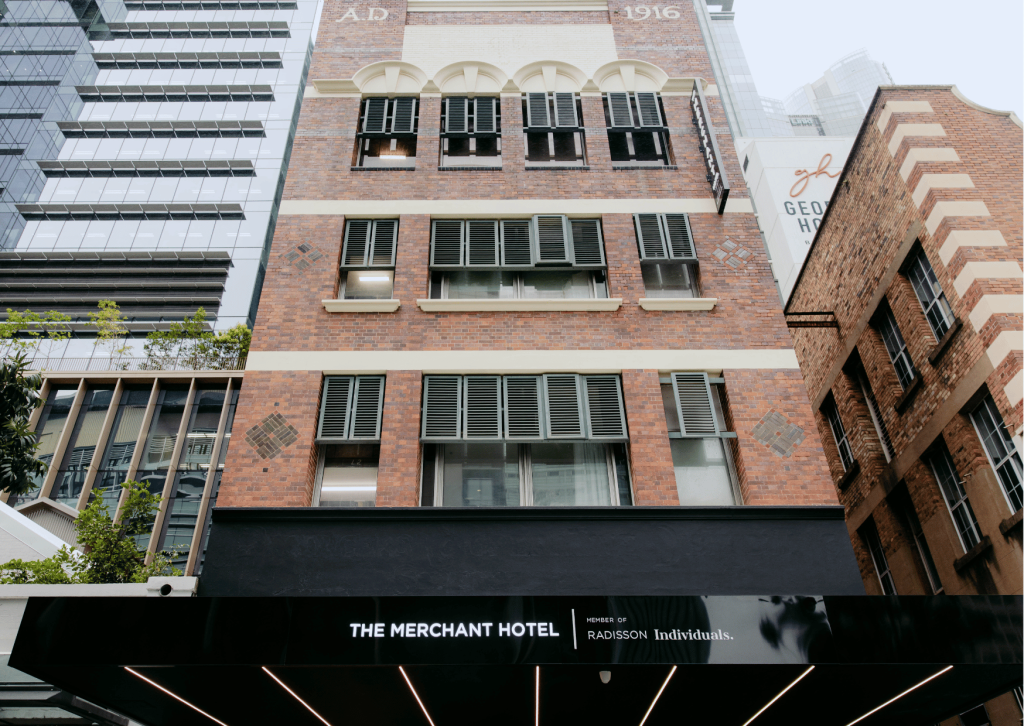
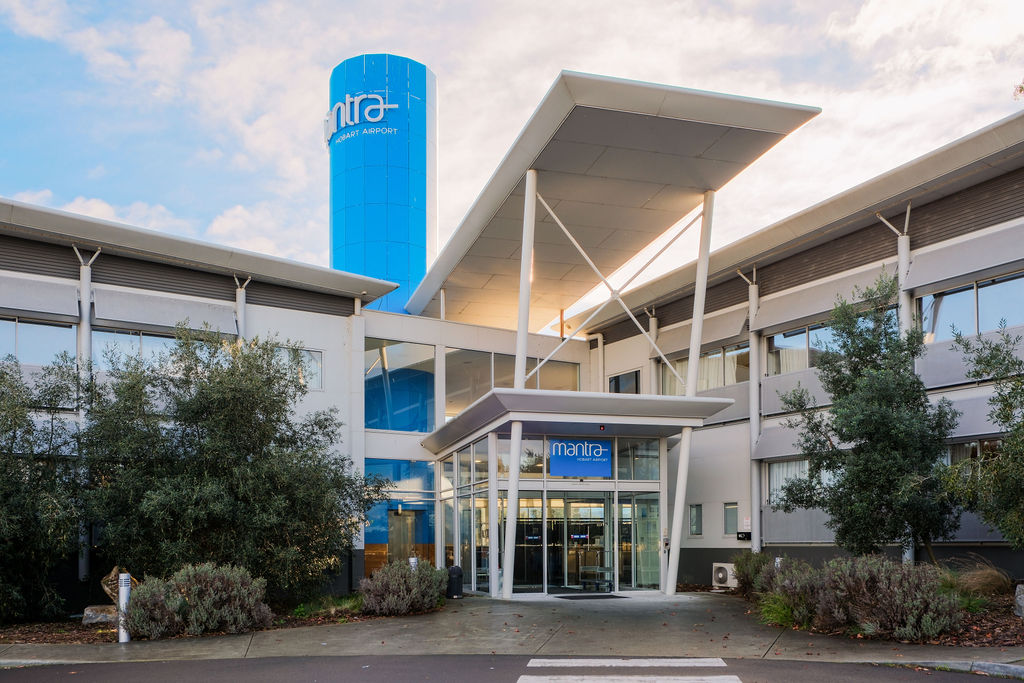
How Mandala works with owners
From Renovation Brief to Owner Return
Mandala approaches renovation from the owner’s side of the equation. Before allocating space or capital, we look at the commercial problem the investment needs to solve.
1. Diagnose Before Design
Define the economic or guest problem first.
2. Use Operating Evidence
Market performance, guest feedback, revenue management, maintenance, utilities and room level data.
3. Test Opportunity Cost
Compare the investment against other uses of the same capital and space.
4. Measure After Opening
Carry the investment thesis into post renovation measurement.
Smart renovation isn't about spending more. It's about putting capital where it can create, protect or recover the most owner value.
Before You Approve Your Next Renovation Budget, Know What the Capital Is Supposed to Do.
Get the evidence, the owner framework, the worked example and the renovation checklist in one 18 page paper.
Free download · 18 pages · September 2026
Management for hotel owners,
by hotel owners.
Work with us
Start a Confidential Discussion
If you are planning a new hotel, adaptive reuse, major conversion or reopening, involve the operating team before the decisions become expensive to change.
Owner and development enquiries
Every enquiry is treated in confidence.